Overview of the York City Walls
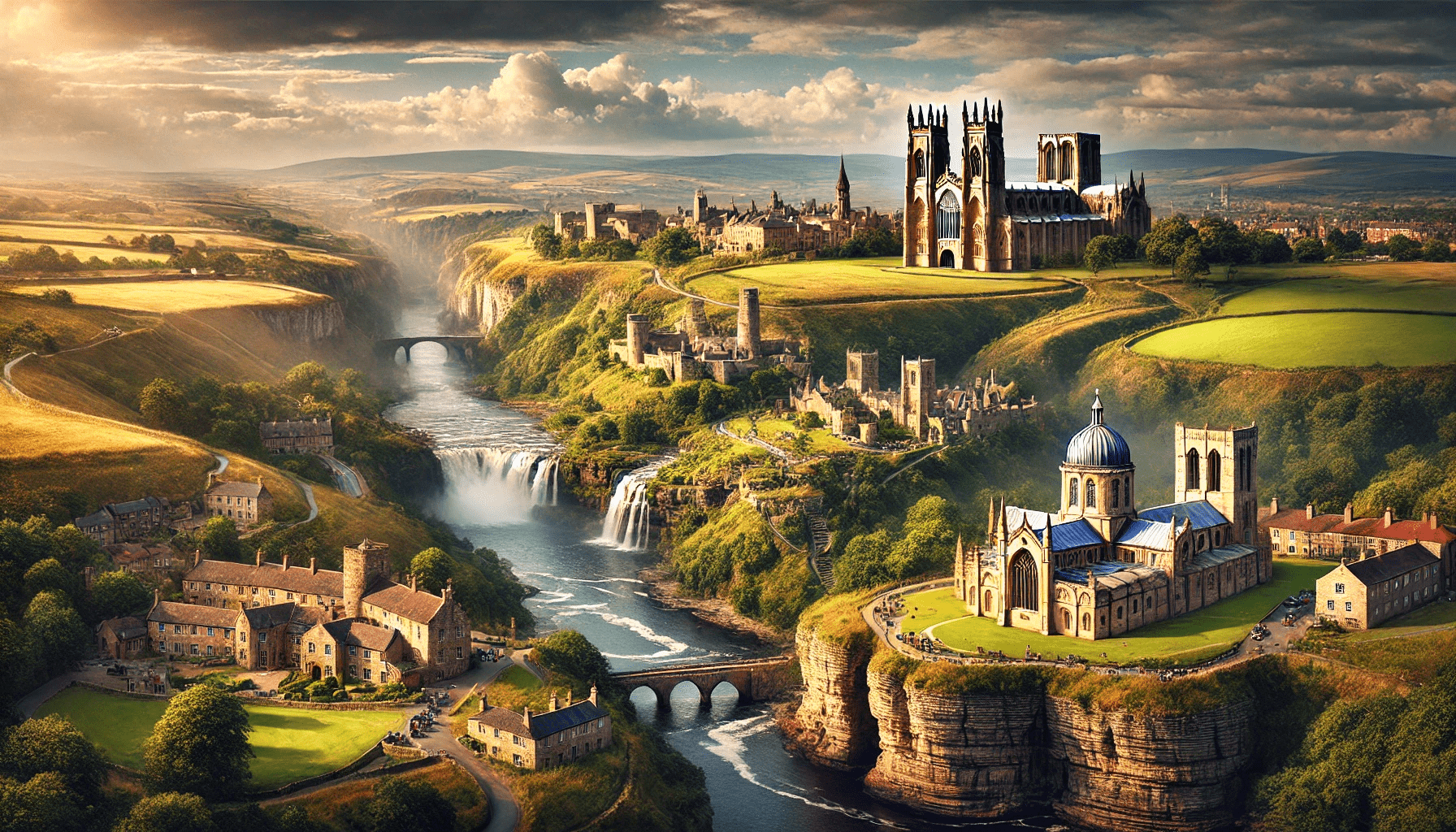
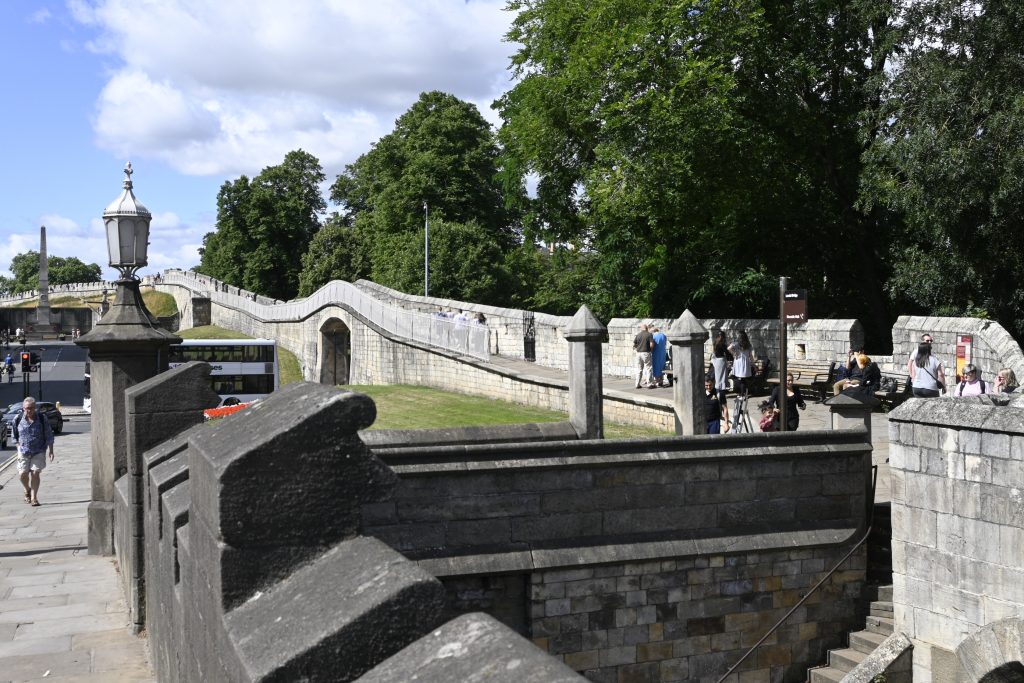
The York City Walls are one of the most iconic landmarks in northern England, encircling the historic heart of York for nearly 2 miles (3.2 km). Dating back to Roman times, these ancient fortifications are the most complete set of medieval city walls in England. Walking the full circuit offers stunning views of York Minster, the River Ouse, and the city’s charming rooftops.
Further Visitor Information
Visitors can explore the walls for free, passing through impressive gatehouses known as Bars — including Bootham Bar, Micklegate Bar, Monk Bar, and Walmgate Bar. Along the way, informative plaques reveal fascinating details about York’s Roman, Viking, and medieval history. The route is easily accessible from the city centre and provides a peaceful yet immersive way to experience York’s rich heritage and timeless beauty.
1. Start at Bootham Bar
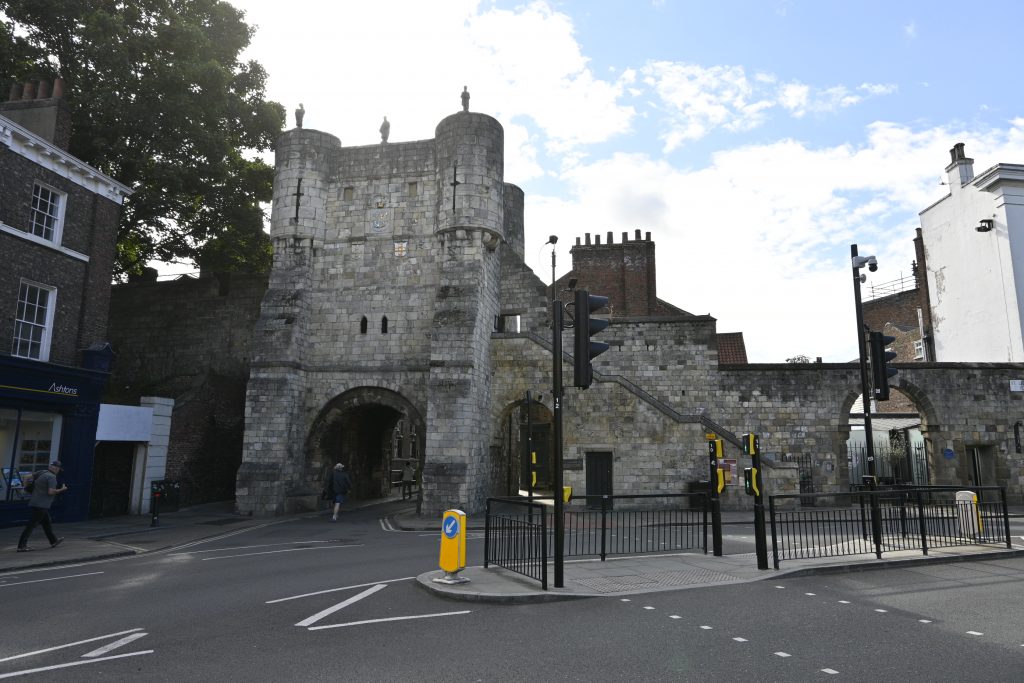
Start at Bootham Bar where you will find a victorian staircase to the second floor of the gateway.
Bootham Bar is a historic gateway in York’s ancient city walls, located near York Minster. Dating back to Roman times, it offers stunning views and marks a popular starting point for the York City Walls walk.
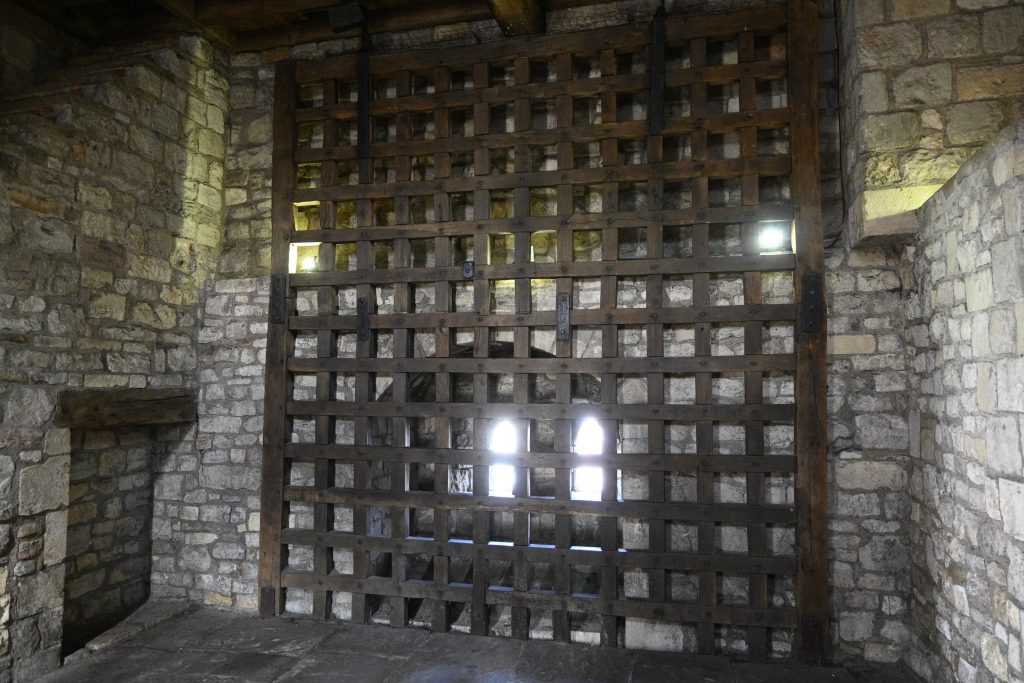
The Bootham Bar portcullis is a rare surviving feature of York’s medieval defences. Once used to secure the city from attack, this heavy iron gate showcases the impressive craftsmanship and military engineering of ancient York.
2. Follow the Walls
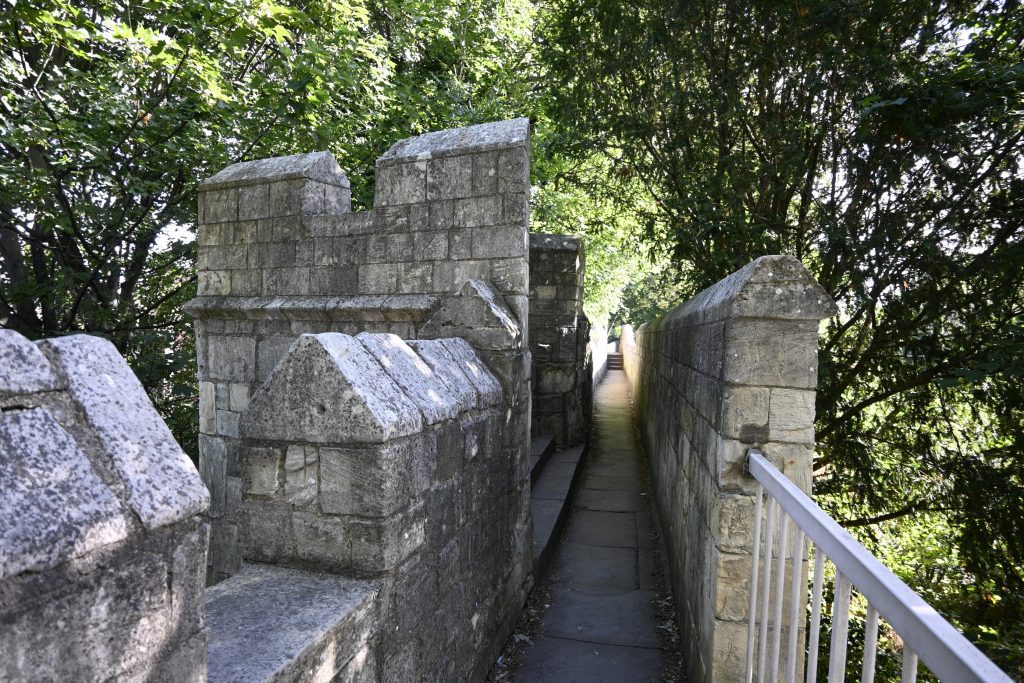
Keep following the walls with Gillygate found on your left and Dean Park on your right. You will receive views of York Minster. The closest West Tower holds the 10 ton bell that chimes the hour known as Great Peter.
3. Robin Hood’s Tower
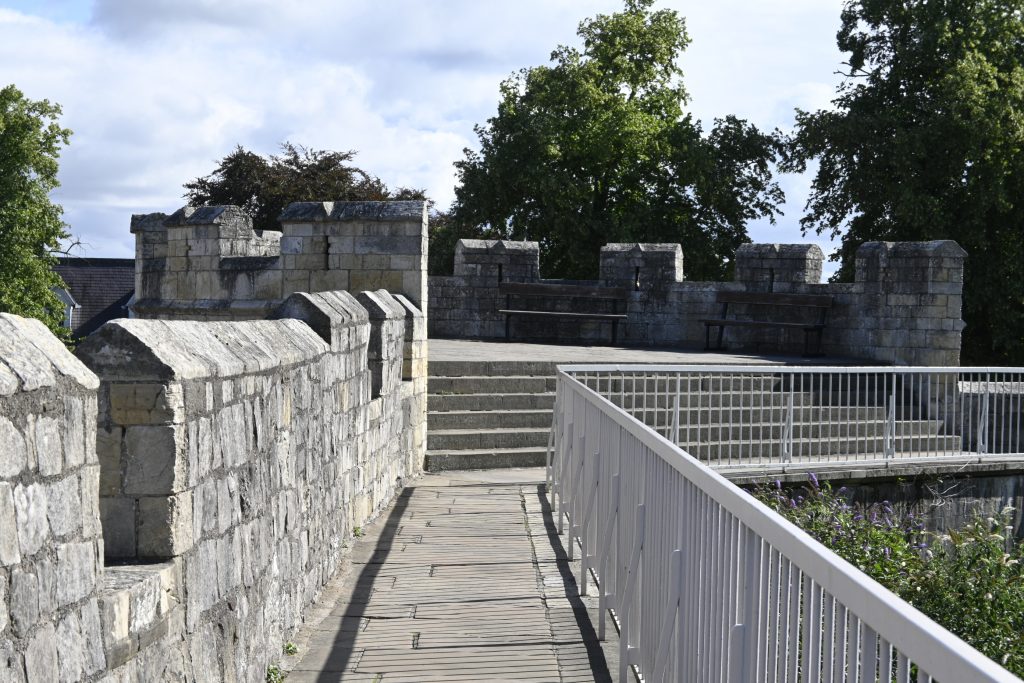
Robin Hood’s Tower is a historic turret along York’s ancient City Walls, offering a glimpse into the city’s medieval defences. Named after the legendary outlaw, it provides scenic views and a fascinating stop on the York City Walls walk.
4. Follow the Moat
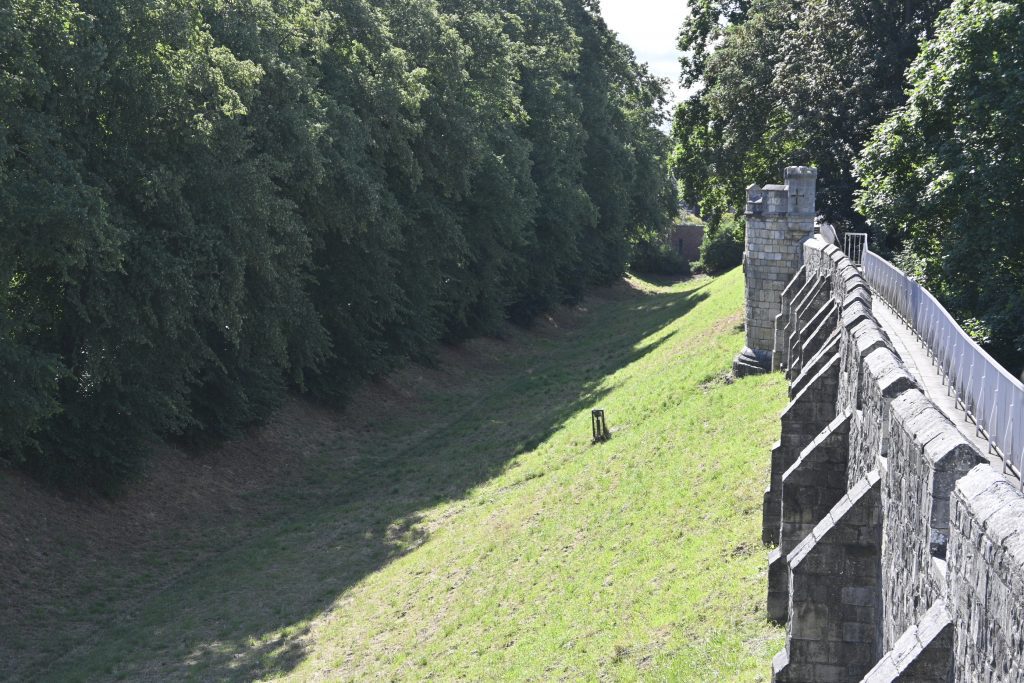
The walls now bend to the right and follows Lord Mayor’s Walk.
Here you will find one of the remaining moats. When in use, they were intentionally filled with everything horrible rather than water. This served a defensive purpose to keep the baddies out!
5. Monk Bar
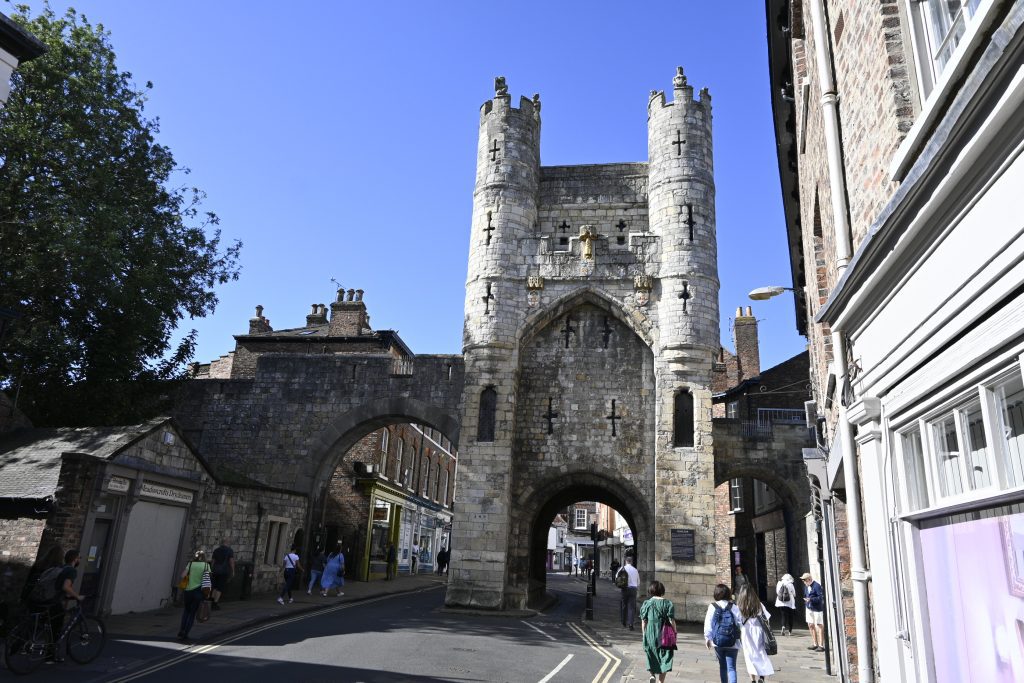
The section between these two gateways followed the original course of the Roman walls and is why they are Roman straight. After Monk Bar, the walls are more hap hazard as they were built by the Danes.
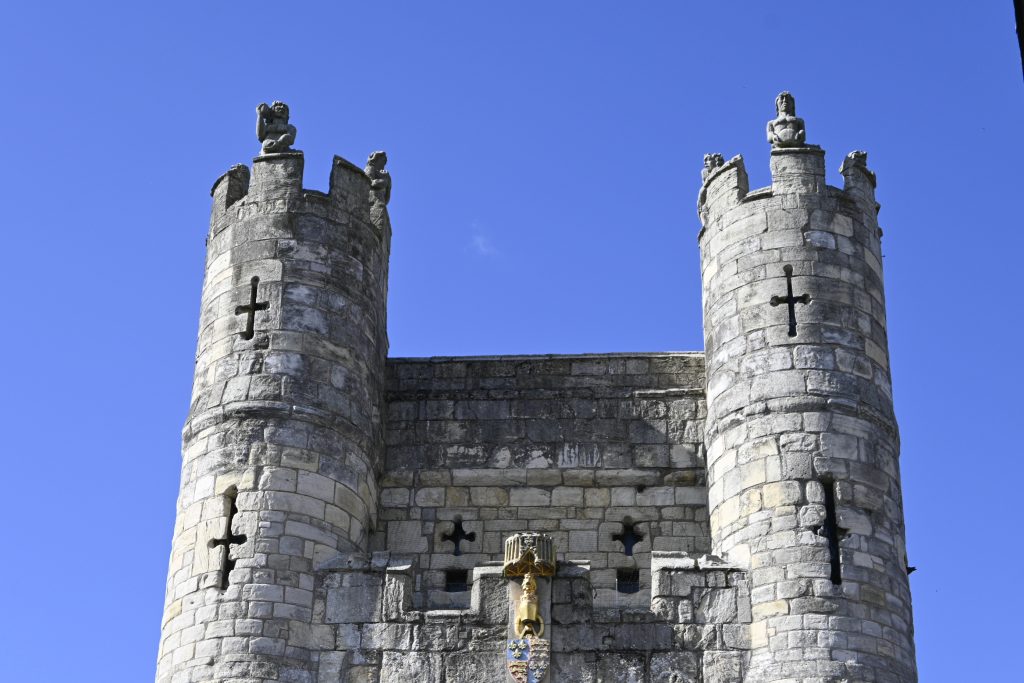
Monk Bar is the tallest and most elaborate of York’s medieval gateways, forming part of the historic City Walls. Built in the 14th century, it once housed guards and now features a museum dedicated to Richard III, offering insight into York’s rich medieval past.
6. Down the Steps
At Monk Bar, we need to head down the steps to street level. At the foot of the steps, we cross the street to find the staircase back up again.
You might want to look at Monk Bar Model Shop that is also somewhat historic. It was established in the 60’s and is still going strong today.
At the top of Monk Bar you will find the so-called Wild Men of York. They were to come alive and throw boulders down on the enemy below. Not that this ever happened!
7. Walk Past the Guildhall
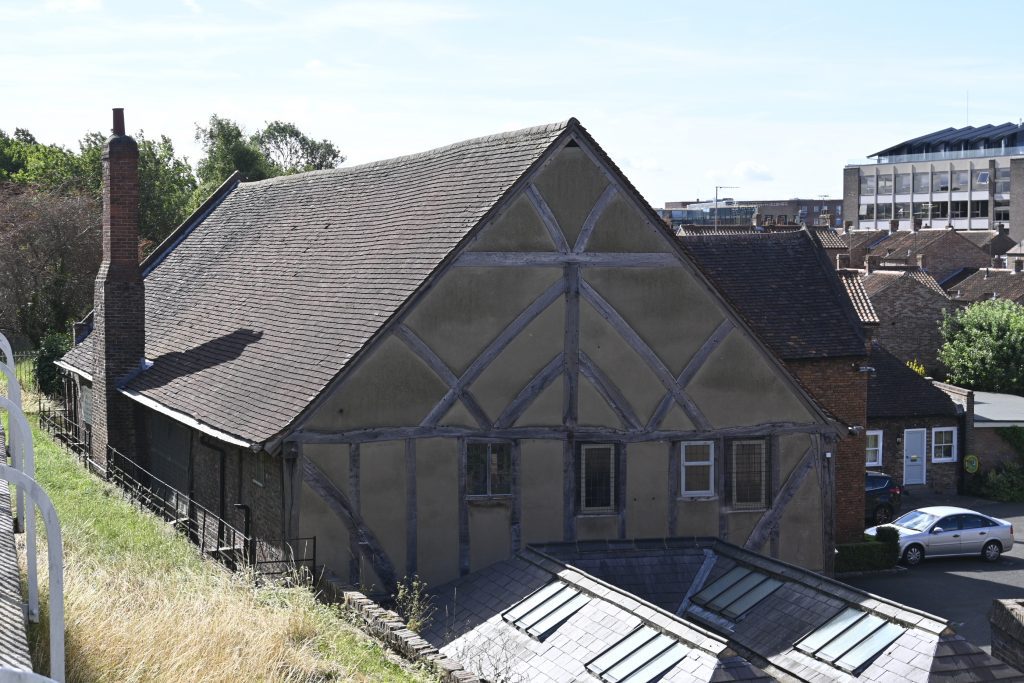
York Guildhall is a striking historic building beside the River Ouse, showcasing centuries of civic heritage. Originally built in the 15th century, it hosted guild meetings and royal visits. Today, it’s a beautifully restored landmark open for events, tours, and exploration in the heart of York.
8. Follow the Walls to Layerthorpe Bridge
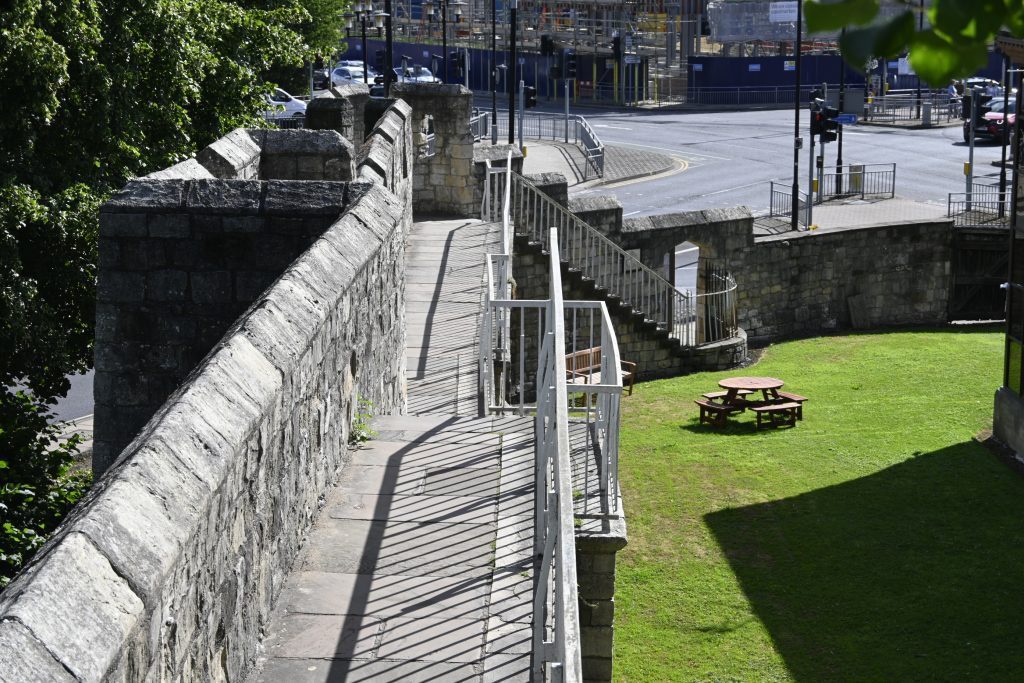
You might think that some of the walls are missing once you arrive at Layerthorpe Bridge as the walls come to an abrupt end. In fact, before the River Foss was canalised, William the Conqueror damned up the Foss to create a marshy fish pool. This pool filled the gap between the walls and thus a further construction wasn’t needed.
In any case, carefully cross the road and follow the River Foss. The Foss will be on your right.
9. Red Tower
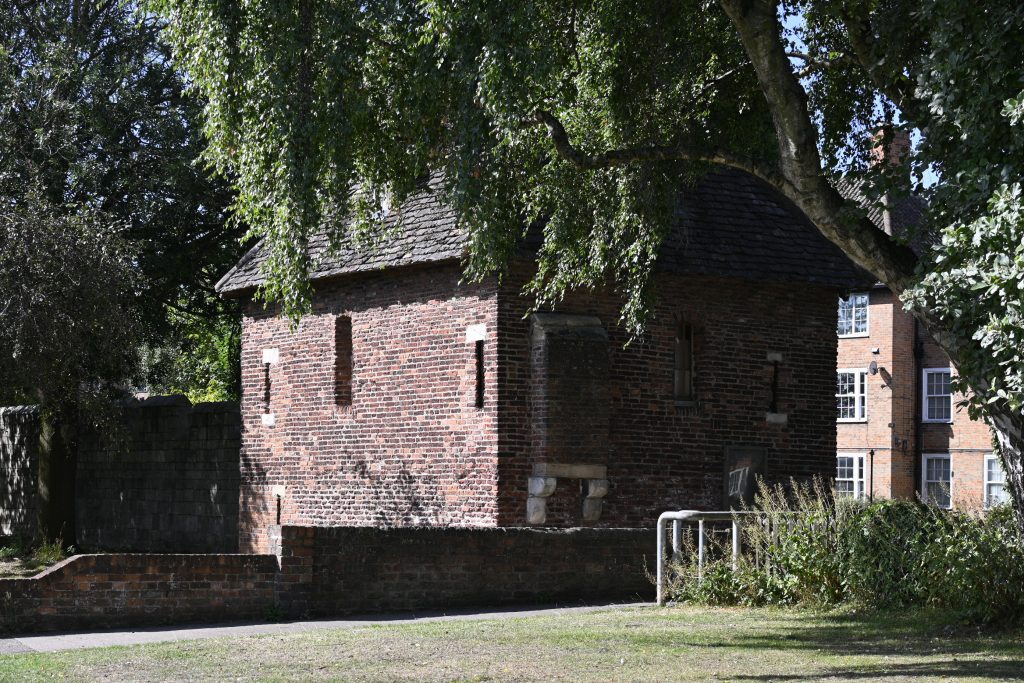
The Red Tower is a prominent medieval defensive structure along York’s City Walls, named for its distinctive red brickwork. Built to guard the city’s approach from the south, it offers a fascinating glimpse into York’s historic fortifications and is a notable stop on the City Walls walk.
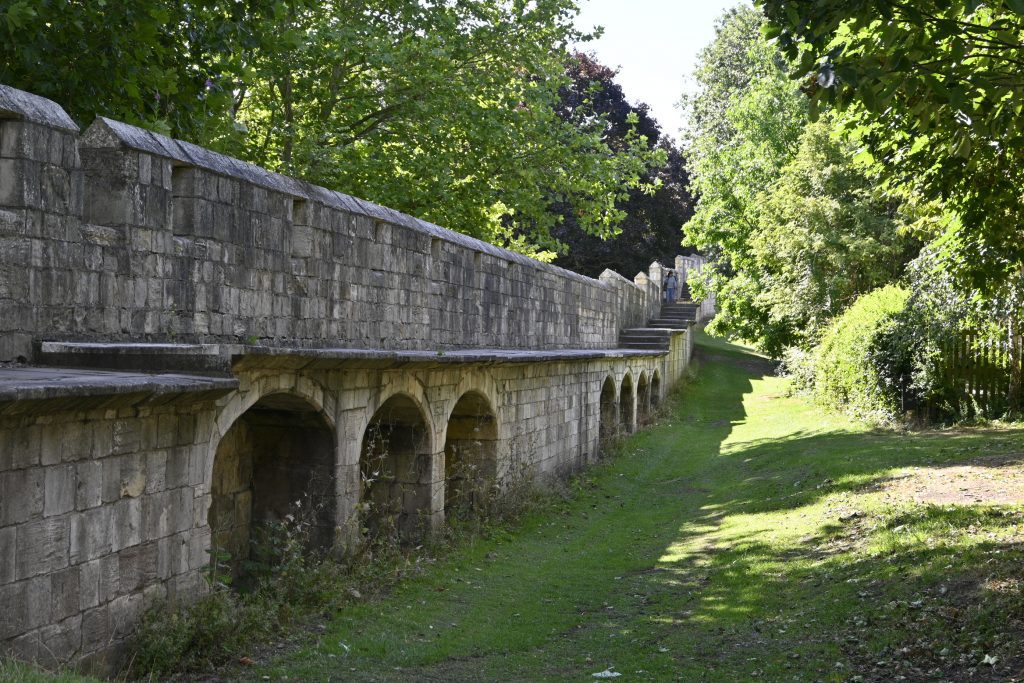
10. Follow the Walls
This section of the walls does contain some steps although they can be managed easily. Follow the walls until you reach Walmgate Bar.
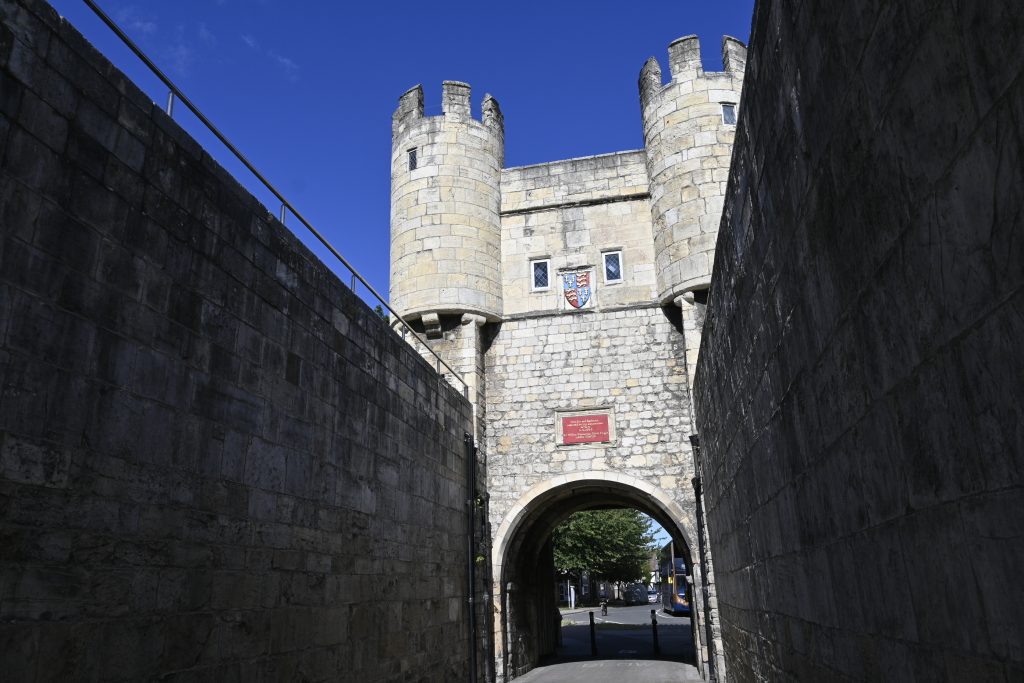
11. Walmgate Bar
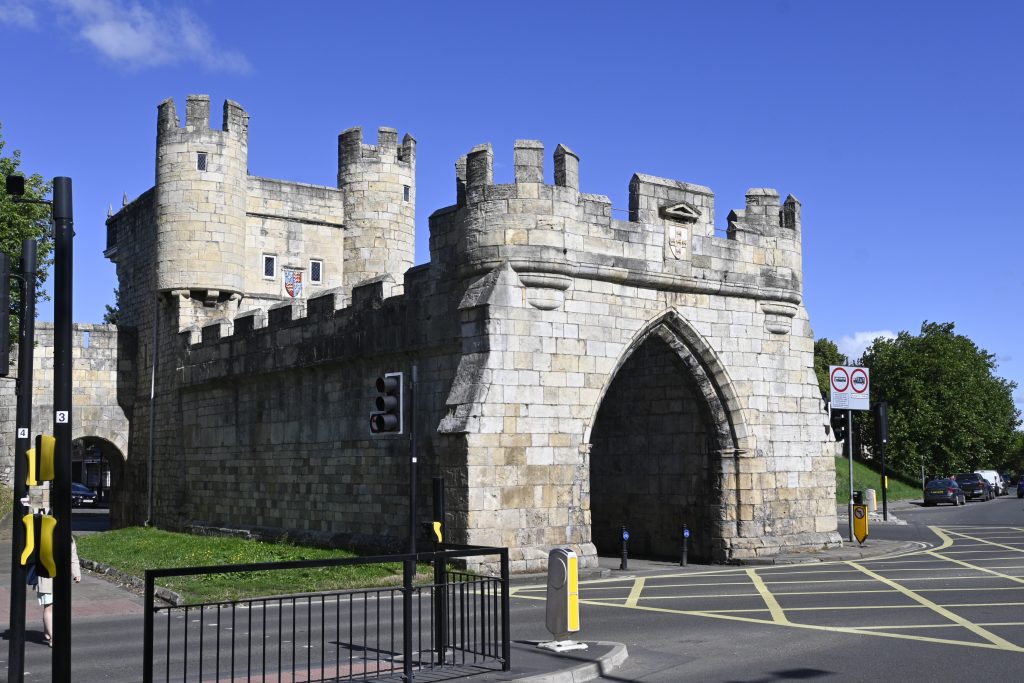
Walmgate Bar is a historic gateway in York’s City Walls, marking the southeast entrance to the city. Dating back to the 12th century, it features medieval architecture and a portcullis, offering visitors insight into York’s defensive past and a key access point for the City Walls walk. It is the most complete gateway in the UK owing to it still having its barbican.
The barbican was a walled extension at the front where defenders would run along the top and fire down at the enemy below, trapping them between the gate of the barbican and the gate of the bar.
12. Follow the Walls to Fishergate Bar
At Walmgate Bar, we head down to street level again, crossing Walmgate carefully and taking the steps at the other side. The walls now continue to Fishergate Bar.
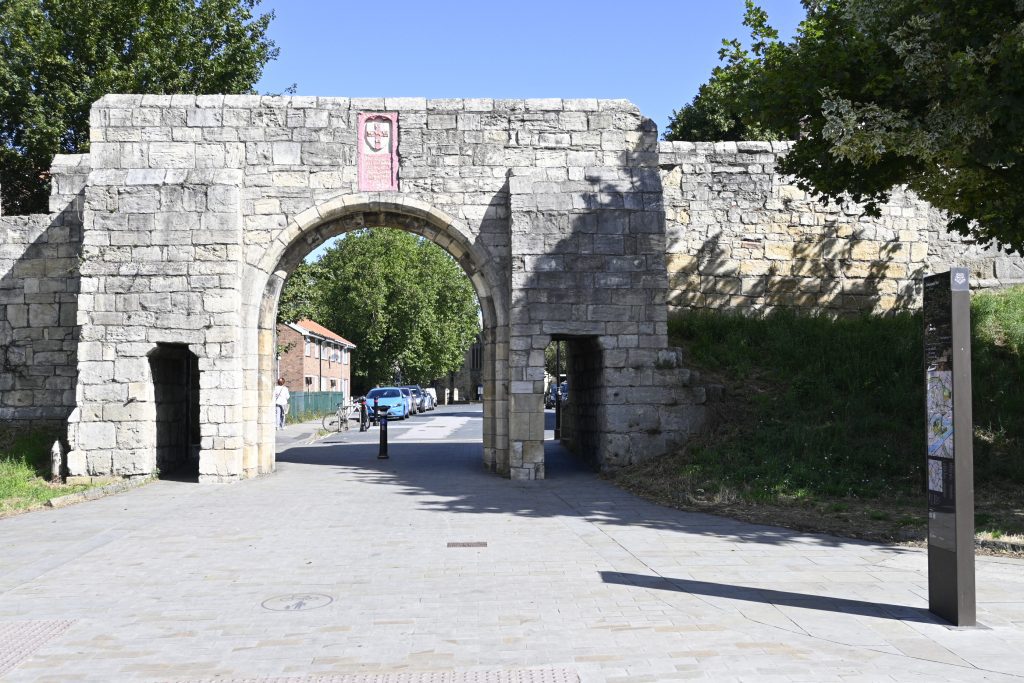
13. Fishergate Bar
Fishergate Bar is a historic gate in York’s City Walls, located at the southern entrance to the city. Built in the 12th century, it features medieval architecture and defensive elements, making it an important landmark and stop along the York City Walls walk. It has no roomed structure but in fact it was a very important gateway. Livestock grazing outside the city was driven through the arch and taken to The Shambles to be slaughtered.
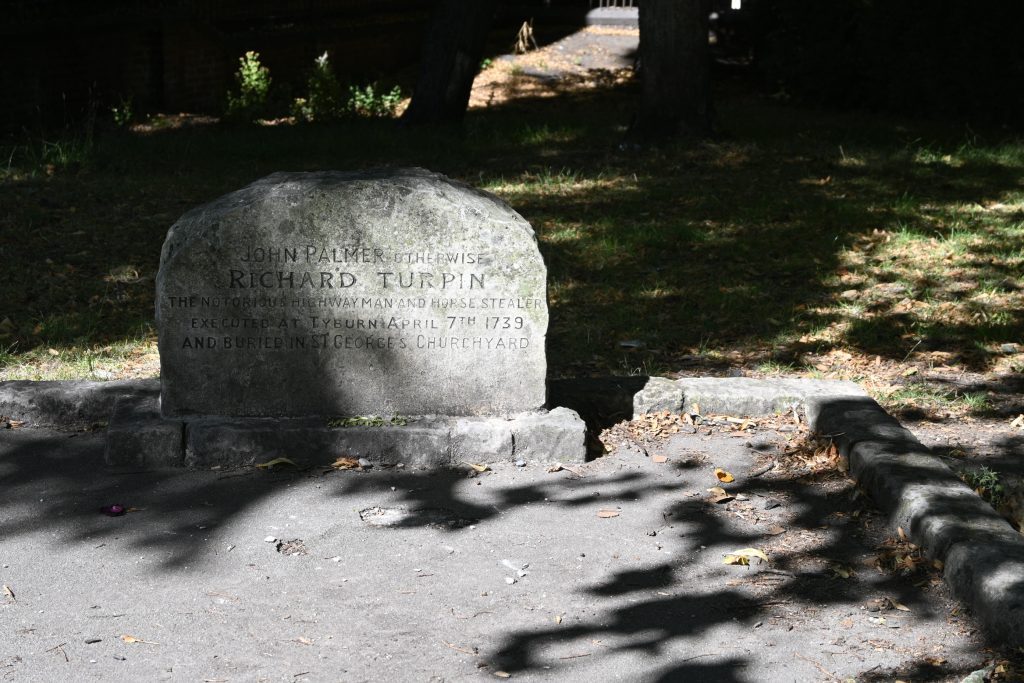
14. Dick Turpin’s Grave
Just along the road through the arch you will see St George’s Church with a grave yard opposite. The one upright headstone belongs to the notorious highwayman Dick Turpin (John Palmer).
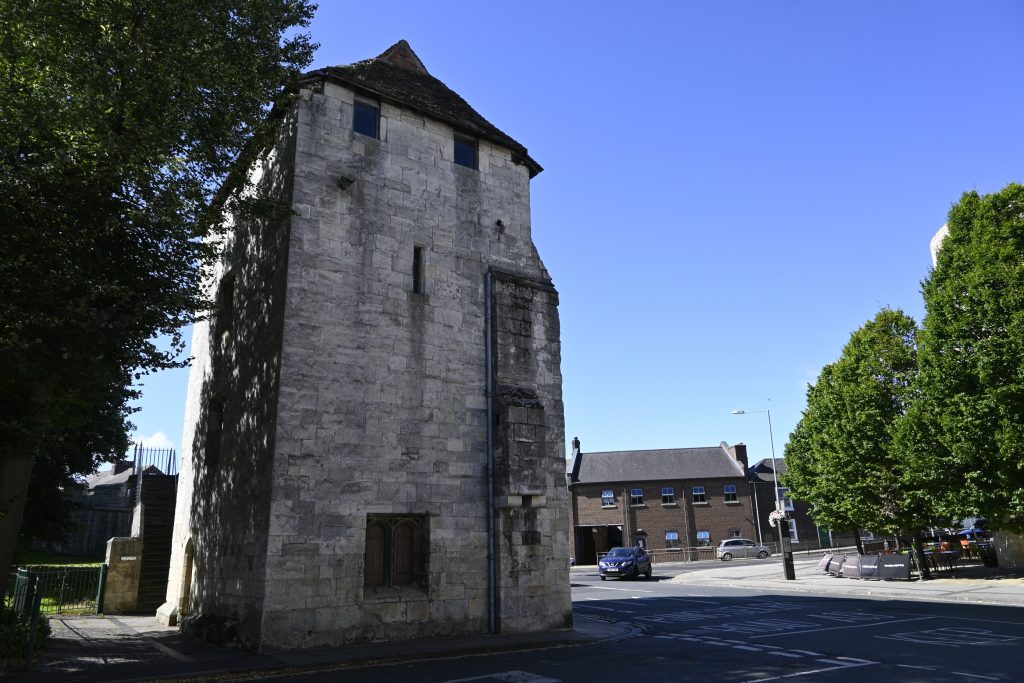
15. Fishergate Postern Tower
Again, the walls may appear missing because of a king’s fish pool that William the Conqueror created here. The Foss and the Ouse merge opposite.
The Fishergate Postern Tower originally had no roof, that was added later and sits on top of the battlements. The gaps in the battlements our now windows!

16. Cross the River Foss
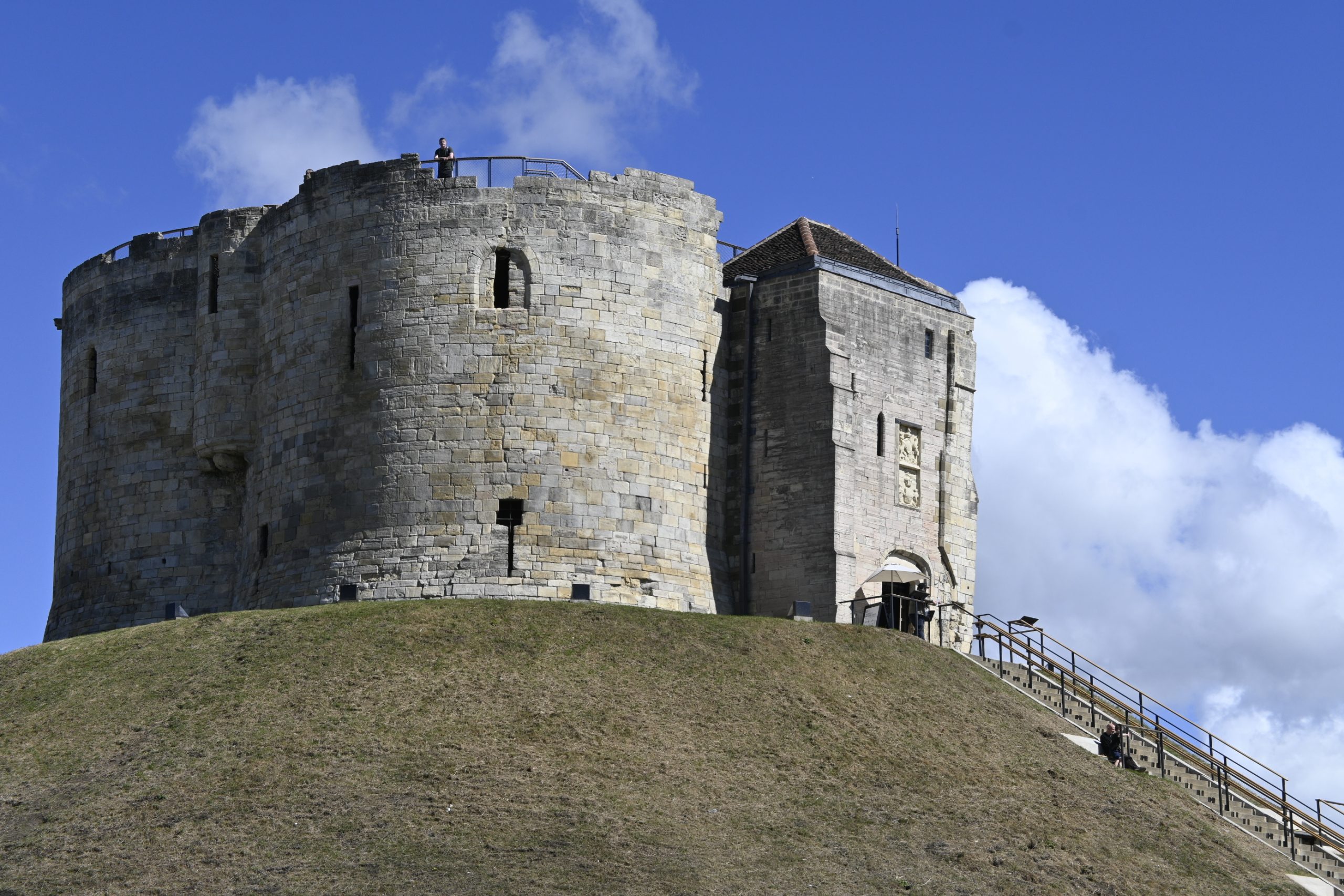
The River Foss is York’s smallest river. From the bridge you can see the back of the Castle Museum. This was part of the Castle Complex constructed by William the Conqueror.
The walls you see were part of the Castle’s walls, separate from the fortifications you have been walking upon.
17. Cross Skeldergate Bridge
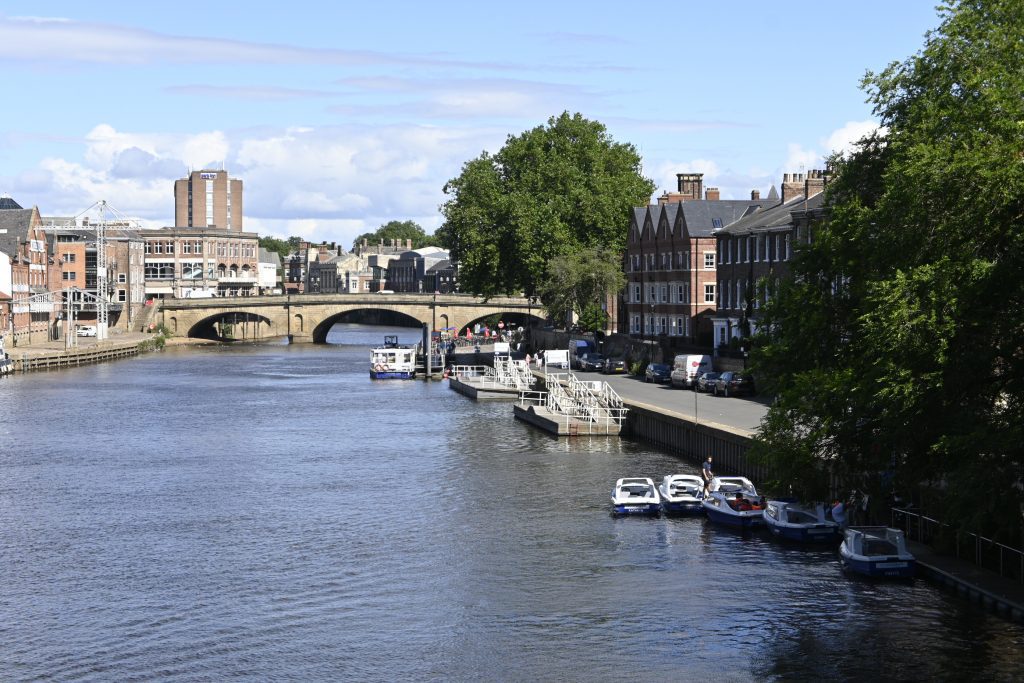
Crossing Skeldergate Bridge gives you views of the River Ouse. Ouse is a keltic word for slow moving water.
At the opposite side of the bridge is our tower back to the city walls.
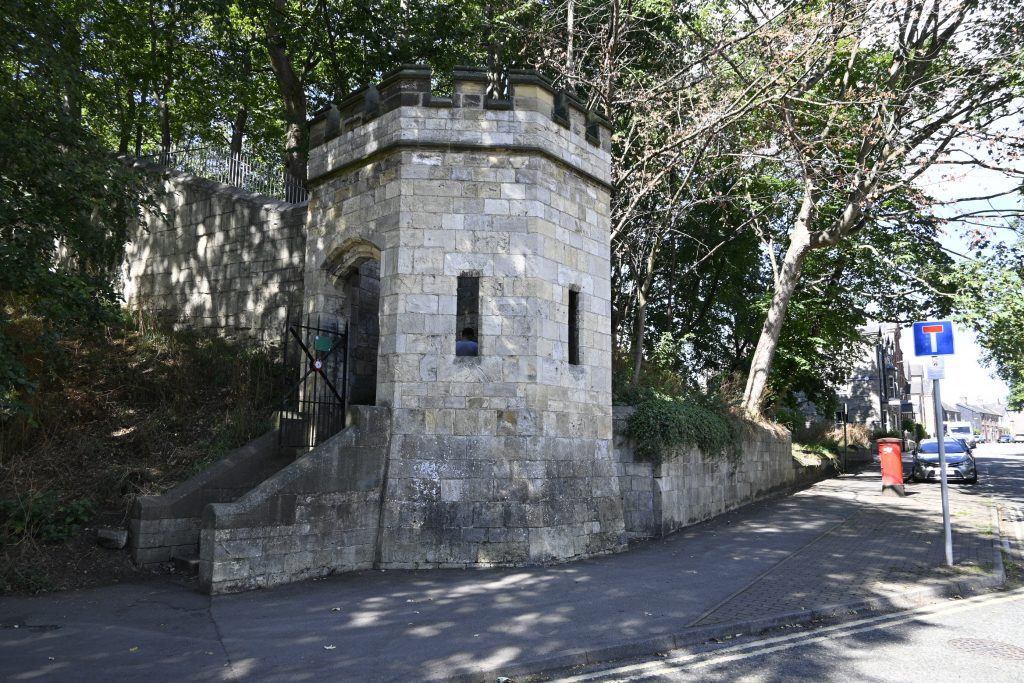
18. Baile Hill Tower
Baile Hill Tower features a staircase back up to the walls. This site was were York’s second castle was found and you can still see the motte today.
This castle was constructed in wood, as was Clifford’s Tower. The latter was upgraded in stone, but this castle was left to reck and ruin. A chain was cast over the river to prevent ships leaving without paying their taxes known as murage. This money went towards the upkeep of the walls.
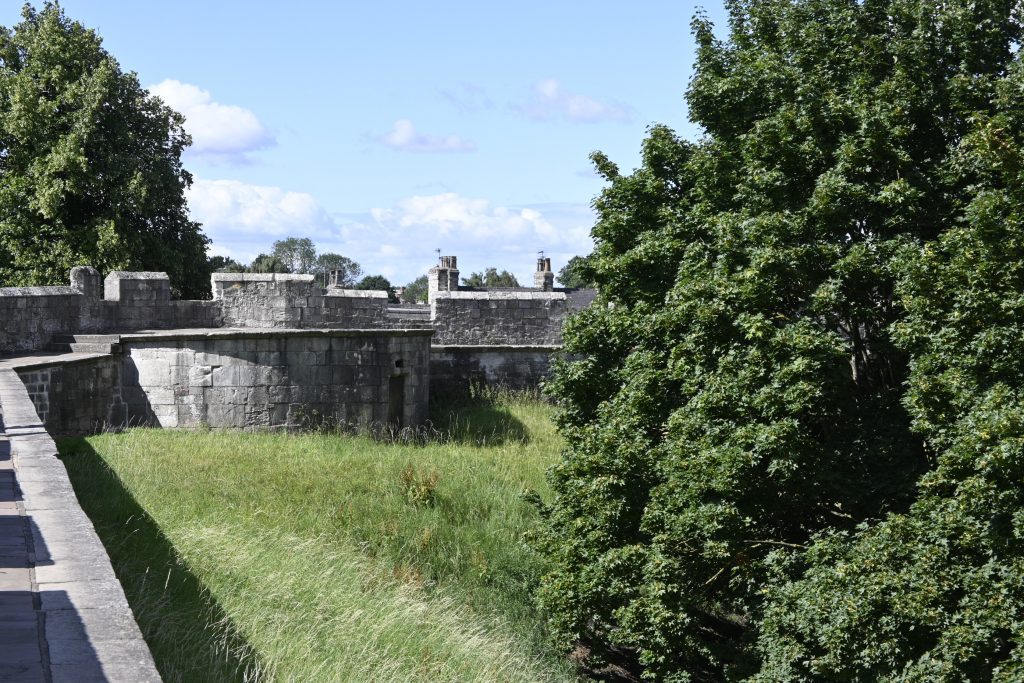
19. Bitchdaughter Tower
It is not entirely understood why it was called Bitchdaughter Tower but it was once a prison believe it or not. It was also used as a gun platform during the Civil War.
It was partially dismantled as you can see, but on the inside you can expect to find a fireplace from the 16th century!
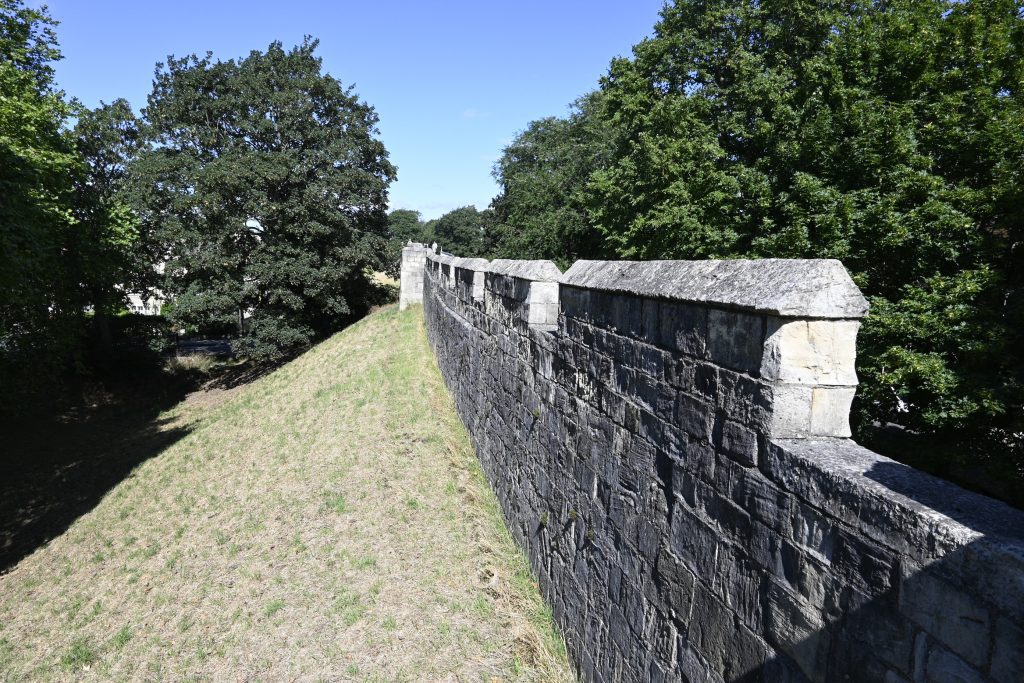
20. Follow the Walls to Victoria Bar
From Bitchdaughter Tower, follow the walls over Victoria Bar. This section is relatively straight. The remains of a former roomed gateway was discovered here.
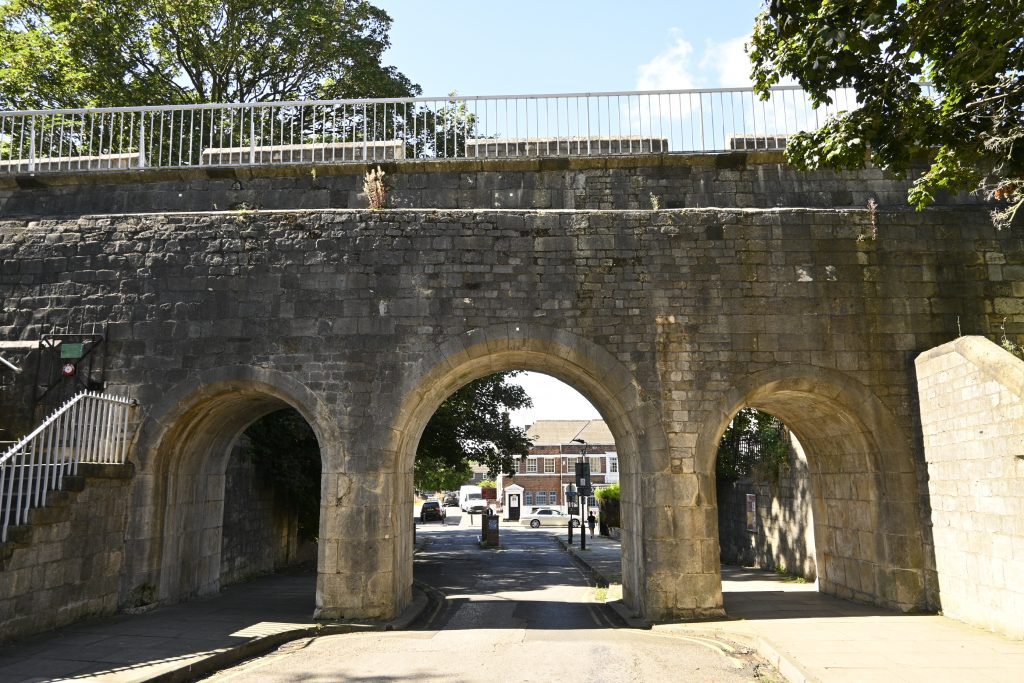
21. Victoria Bar
Victoria Bar is actually a gateway that was created by the Victorian’s in order to improve traffic flow. These arches the Victorian’s created in the walls were campaigned against by William Etty, A local Victorian painter who painted nude historical scenes.
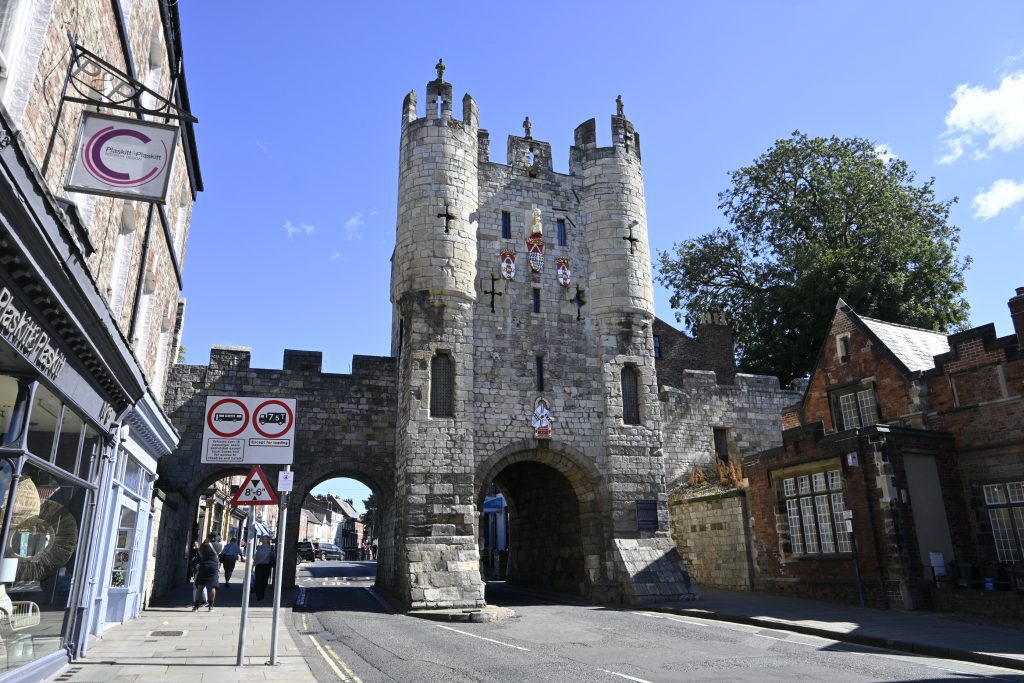
22. Micklegate Bar
Micklegate Bar is one of the most famous and historically significant gateways in York’s City Walls, forming the main southern entrance to the city. Its name comes from the Old English “Mickel” meaning great, and “Gate” meaning street, so it translates as “Great Street Gate.”
The current stone structure dates largely from the 14th century, though the site has been fortified since Roman times. The bar is renowned for its role as a ceremonial entrance for kings and queens entering York; heads of traitors and rebels were famously displayed on spikes above the gate in medieval times, making it a powerful symbol of law and authority.
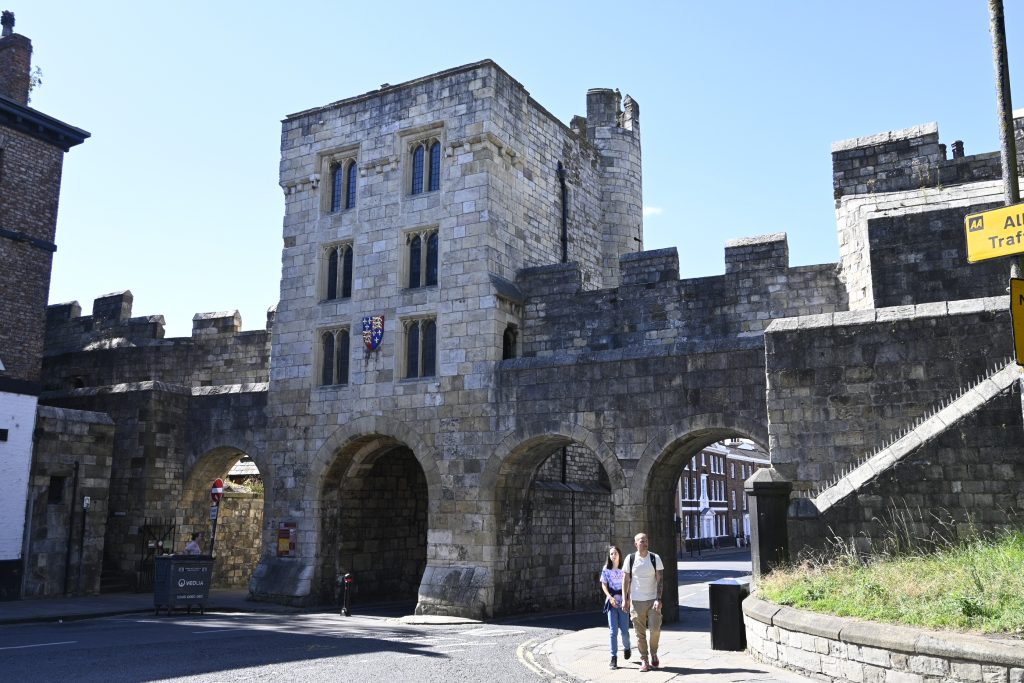
23. Take the Steps
The trail takes you through the tower but there are staircases to street level at both sides. You can also find York City Walls Experience here too.
The other side of the bar takes us to the railway section of the trail.
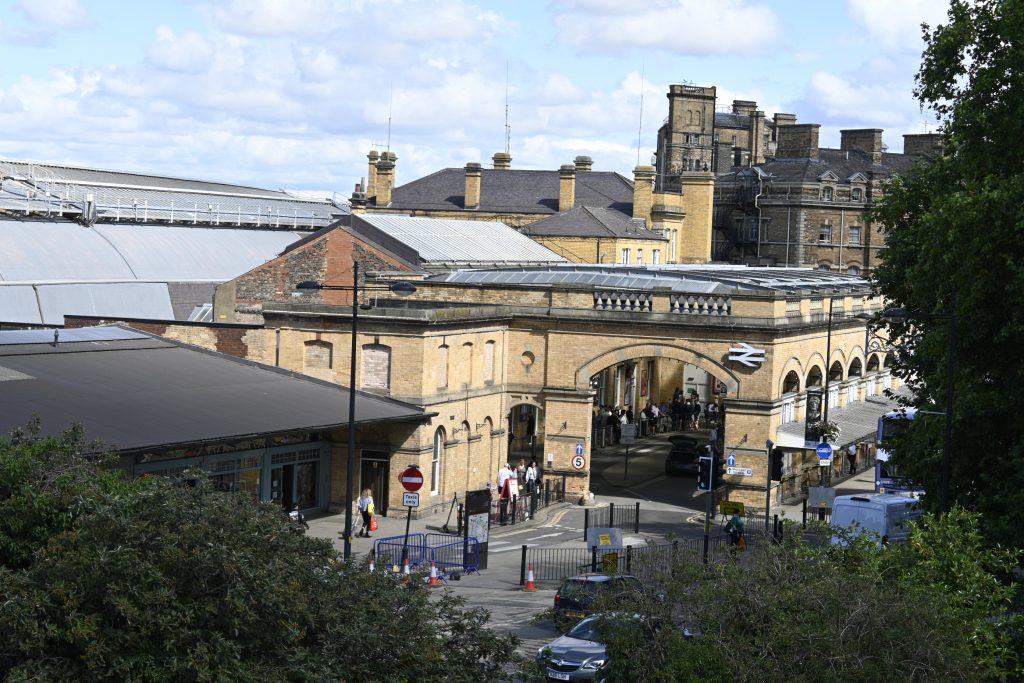
24. York Station(s)
As you follow the walls you will see the Victorian Station that was built on a curve, and once the largest station in the world. It was opened in 1877.
On the opposite side of the walls is the area where York’s first railway station stood, a terminus. When traffic increased, the new station was required.
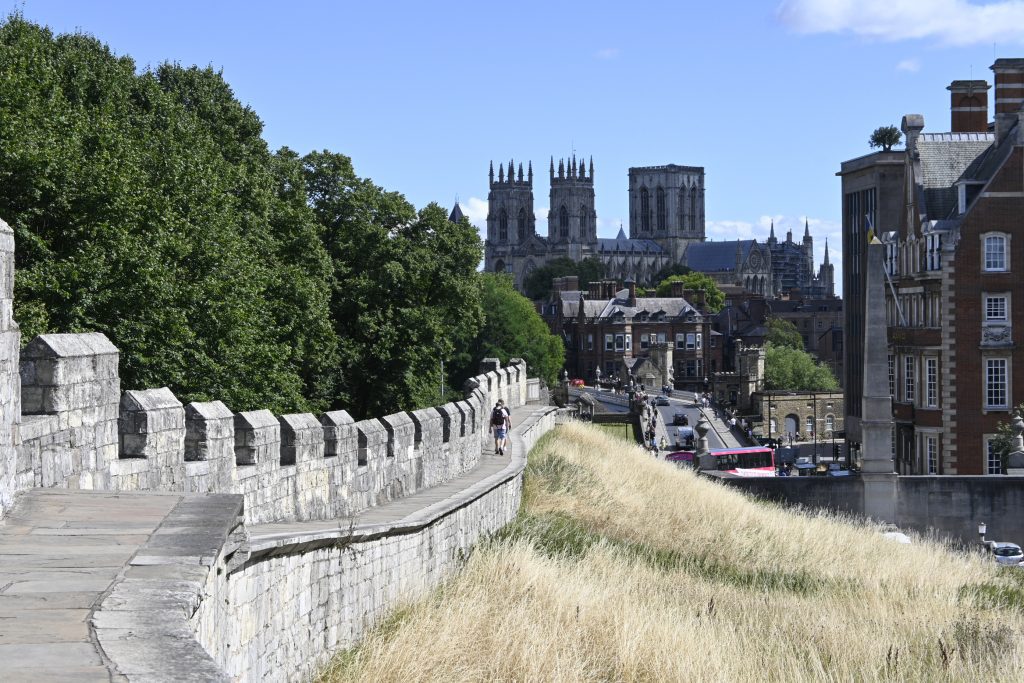
25. Views of the Minster
Probably one of York’s most photographic locations is now where we find ourselves. You can see the minster in its entirety.
The arches underneath this section were again built by the Victorian’s. William Etty, whose statue is in Exhibition Square, campaigned against these. In fact, the council at the time wanted to dismantle the walls altogether!
Useful Links
York City Walls Walk – Explore the Ancient Walls of Historic York
Explore the York City Walls with these handy links, offering information on walking routes, historic gateways, towers, and nearby attractions. Plan your visit, discover the city’s medieval heritage, and make the most of this iconic York experience.
Useful Links – York City Walls:
Bailey Hill Tower – Scenic Views
Official York City Walls Information – Visit York
York Walls Trust – History & Conservation
York Minster – Nearby Attractions
Bootham Bar – Historic Gateway
Fishergate Bar – Medieval Entrance
Walmgate Bar – City Walls Gateway
Red Tower – Defensive Structure